A practical way to shift your state before stress takes over
There is a point in almost every healing journey where information is no longer the missing piece.
You may already understand that stress affects the nervous system. You may know that meditation helps, that breathwork can change your state, and that slowing down would probably be good for you. You may have had powerful experiences in workshops, retreats, sound journeys, or meditation practices and felt what it is like to be deeply calm, open, and connected. The harder part is bringing that state into ordinary life.
It is one thing to feel regulated when the phone is off, the room is quiet, and someone is guiding you through a practice. It is another thing entirely to stay connected to yourself when you are running late, reading an upsetting email, having a difficult conversation, lying awake at 2am, or carrying more than your system has capacity for. This is where the real work begins.
One of the most useful ideas in The Secret Frequency of the Universe is not simply that everything is vibration. It is the reminder that our internal state influences how we meet what happens next.
We cannot control every circumstance, and we do not need to pretend that changing our “frequency” will make difficult realities disappear. What we can learn to work with is the state of our own body, breath, attention, and nervous system. That gives us somewhere practical to begin.
Change the State Before You Try to Solve the Problem
When something feels wrong, most of us instinctively move straight into problem-solving.
We think harder, replay the conversation, search for answers, and make another plan. Sometimes that is useful. But when the nervous system is already activated, more thinking often creates more noise.
A stressed body tends to produce stressed thoughts. This is why one of the most helpful things you can learn is to work with your state before trying to work out the entire situation.
You might still need to have the difficult conversation. You might still need to make a decision, change something, or set a boundary. The difference is that you are less likely to do it from the part of you that feels rushed, threatened, or overwhelmed.
This is what we mean when we talk about going “upstream.” Instead of beginning with the problem, begin with the body that is experiencing the problem.
Notice your breathing, the tension in your jaw, whether your shoulders are lifted, and whether you are holding your breath while reading an email or thinking about what someone said.
Then give your system a few moments of support before asking it to make a decision. This is not avoidance. It is preparation.
Your Body Is Giving You Information All Day
Many people only notice stress once it has become impossible to ignore. By then, the body may already be exhausted, reactive, shut down, or unable to settle. Part of nervous system work is learning to recognise the quieter signals that come earlier.
For one person, that might be shallow breathing. For another, it may be rushing through simple tasks. You may notice yourself speaking faster, checking your phone repeatedly, becoming unusually impatient, clenching your stomach, or losing the ability to focus on one thing at a time.
These signs are not failures. They are information. The earlier you notice them, the more choice you have about what happens next. This is where simple practices become far more useful than complicated ones.
If a practice takes thirty minutes, requires perfect silence, or depends on being in the right environment, you may not use it when you need it most. If it takes ninety seconds and can be done in the car, at your desk, before a meeting, or while making dinner, it has a much better chance of becoming part of your life.
Use Sound Before Silence
Meditation can be difficult when the nervous system is already overstimulated. You sit down, close your eyes, and immediately hear every thought you were too busy to notice during the day.
The instinct is often to believe you are “bad at meditation.” You are probably not. Your system may simply need a transition. This is one of the most practical ways we can use sound.
Before asking the mind to become quiet, give the body something steady to feel. Sit comfortably and breathe in through your nose. On the exhale, make a gentle hum.
Do not try to make it musical. Feel the vibration in your chest, throat, face, or skull. Repeat this five times. Then stop making sound and sit quietly for one minute. Notice the difference.
The sound gives your attention somewhere physical to land. The longer exhale can help slow the pace of the breath, and the vibration creates a sensory anchor that brings awareness away from thought and back towards the body.
For some people, this is a far more accessible doorway into meditation than trying to go directly into silence. Over time, you may find that the quiet after the sound becomes just as important as the sound itself.
Build Small Moments of Regulation Into Your Day
We often think of wellbeing practices as something separate from life.
Meditation happens in the morning. Yoga happens at a class. Breathwork happens during a session. A retreat happens once or twice a year.
These spaces are valuable because they give us time and support to go deeper. But lasting change is often built in the ordinary moments between them.
The nervous system learns through repetition. This means that one two-minute practice used regularly can sometimes be more useful than a long practice you only remember when you are already overwhelmed.
A few places to begin are:
Before opening your phone in the morning, place a hand on your chest and take three slower breaths before taking in everyone else's messages, news, and demands.
Before a difficult conversation, hum gently for three exhalations and feel your feet on the ground before you speak.
After work, take two minutes to consciously transition out of the working day rather than carrying its pace straight into your evening.
Before meditation, use a few minutes of humming or toning to help the body settle before moving into silence.
When you notice yourself becoming reactive, pause long enough to take one full breath before replying.
None of these practices are dramatic. That is partly why they work. They are simple enough to become real.
Do Not Wait Until You Feel Calm
One of the traps in self-development is believing that regulation should result in calm every time. It will not. There are days when you may do the breathwork, make the sound, go for the walk, and still feel angry, sad, unsettled, or uncertain.
The practice has not failed. Regulation is not about removing every uncomfortable feeling. It is about increasing your capacity to stay connected to yourself while the feeling is there.
You may still feel anxious and notice that you can breathe. You may still feel angry and choose not to send the message immediately. You may still feel grief and allow your body to soften around it rather than fighting it. You may still feel overwhelmed and recognise that what you need is rest rather than another hour of pushing through.
This is a very different relationship with healing. Instead of asking, “How do I get rid of this feeling?” you begin asking, “How can I stay with myself while this is here?”
That is a skill. It gets stronger with practice.
Use Your Voice as a Regulation Tool
We use our voice constantly, but most of us rarely think about how it feels inside the body. A simple hum, sigh, chant, or sustained vowel sound creates vibration through the tissues of the chest, throat, jaw, and face. That vibration can become a way of bringing awareness back into sensation.
You do not need special equipment. You do not need a singing voice. You do not even need privacy if you use a very soft hum.
Try this when you notice tension building. Breathe in naturally through the nose. As you exhale, make a quiet “mmm” sound. Let the vibration be more important than the volume.
Repeat it three to five times. Then pause. Ask yourself what has changed physically, rather than whether you feel “better.”
Has the breath moved lower? Has the jaw softened? Do you feel your chest more clearly? Are your thoughts moving at the same speed?
This kind of observation matters because it teaches you to notice subtle shifts.
Healing is not always a dramatic release. Sometimes it is a five percent change in the way you are meeting the moment.
Create a Pause Between Trigger and Response
One of the most useful outcomes of any nervous system or meditation practice is not that you become impossible to trigger. It is that you begin to recognise the trigger sooner.
There is a small space between what happens and how we respond. When we are stressed, that space can feel almost nonexistent.
Someone says something and we react. An email arrives and the body contracts. A plan changes and the mind immediately moves into worst-case scenarios.
Practices involving breath, sound, and body awareness can help widen that space. Not by suppressing the response, but by giving you enough awareness to notice it.
Before replying to something difficult, try this:
Put both feet on the floor.
Take one slow breath in.
Exhale with a quiet hum.
Relax the tongue away from the roof of the mouth.
Read the message again.
Then decide what actually needs to be said.
Sometimes you will respond exactly as you originally intended. Sometimes you will choose different words. Sometimes you will realise you do not need to respond yet.
That is regulation in practice.
Let Your Meditation Change With Your Nervous System
There is no rule that says meditation has to look the same every day. Some days silence will feel nourishing. On other days, sitting still may make the system feel more agitated.
Instead of forcing the same practice regardless of what is happening inside you, learn to work with the state you are in. If you feel restless, begin with movement. If you feel disconnected or numb, start with stronger sensation such as rubbing your hands together, feeling your feet, or making sound.
If the mind is extremely busy, count the breath or use humming before sitting in silence. If you feel settled, allow yourself to remain still for longer.
This is a more embodied way of meditating because the practice becomes responsive rather than rigid. The goal is not to perform meditation correctly. The goal is to develop a clearer relationship with your own inner state. That relationship is what eventually begins to travel with you beyond the meditation cushion.
The Practice Is Not to Become a Different Person
Much of modern wellbeing can quietly become another form of self-improvement.
We are encouraged to optimise our sleep, our habits, our mindset, our body, our productivity, and even our spirituality. Eventually, healing itself can start to feel like another project. There is always something else to fix.
This is where it can help to remember that the purpose of these practices is not to turn you into a perfectly calm, endlessly positive version of yourself. It is to help you become more available to your actual life.
More able to notice when you need rest. More able to communicate clearly. More able to feel without immediately becoming overwhelmed by what you feel. More able to recognise when you have moved away from yourself and know some simple ways to return.
For us, this is a large part of what inner self-mastery means. It is not mastery over the body. It is a relationship with the body.
Why Retreats and Deeper Practice Still Matter
If these tools can be practised at home, it is reasonable to ask why we need workshops, retreats, or deeper programs at all.
Daily practice and immersive practice serve different purposes. The small things you do at home help you build consistency.
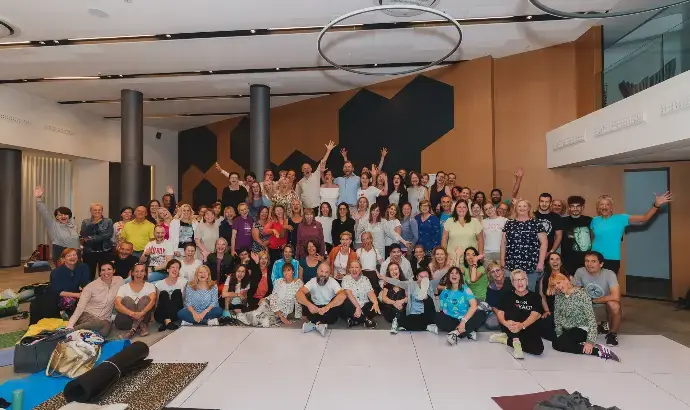
A retreat, workshop, or ongoing Inner Self-Mastery can give you the space to go further. When daily responsibilities temporarily fall away, you often begin to notice patterns that are harder to see when you are moving quickly through normal life.
You may have time to work with breath for longer. You may experience sound in a group rather than alone. You may notice how your nervous system responds in relationship with other people. You may also receive guidance when you reach the places that are difficult to navigate by yourself.
The purpose is not to become dependent on the retreat, teacher, or practice. Ideally, the opposite happens. You leave with a deeper understanding of how to work with yourself. Then the real integration happens when you return home and practise in the places where life is actually happening.
A Practice for the Next Seven Days
For one week, choose one moment in your day when you usually feel rushed, distracted, or reactive. Do not try to change your whole routine. Work with that one moment.
When it arrives, stop for about one minute. Feel both feet on the ground. Take a comfortable breath in through your nose. Exhale with a gentle hum or “Ah” sound. Repeat this three times.
Then ask yourself one question:
What does my system need before I take the next step?
Sometimes the answer may be another breath. Sometimes you may need water, movement, food, rest, or a conversation. Sometimes you may realise that you are ready to continue exactly as you are.
The point is not to always find the perfect answer. The point is to create the habit of checking in before automatically pushing forward. This is how self-awareness begins to become self-trust.
Bringing the Teaching Into Real Life
The deeper lesson in The Secret Frequency of the Universe is not that you need to understand every idea about vibration, sound, or consciousness.
It is that you can begin paying closer attention to the state from which you are living. Your breath is available in the middle of a difficult day. Your voice is available when the mind is busy. Your body is giving you information before stress becomes overwhelming. Your awareness gives you a chance to notice what is happening before the old pattern takes over.
These are simple things, but they are not superficial.
When practised consistently, they become part of how you meet your relationships, your work, your meditation, your challenges, and yourself.
This is the kind of work we continue to explore through Live In Flow retreats, workshops, and our Inner Self-Mastery. The intention is not simply to collect more information about healing. It is to practise these tools deeply enough that they begin to become available when real life asks something of you.
If you feel drawn to explore the work more deeply, you can discover our upcoming retreats, workshops, and ways to practise with us at Live In Flow: 👉 Upcoming Retreats & Workshops
Before you move on, check in with your body for a moment. Notice where you are holding tension, take one slower breath, and let a soft hum leave on the exhale. You do not need to create a special experience. You are simply giving yourself a moment to come back into relationship with your body before the day carries you somewhere else.