How to hear what matters when fear, pressure, and expectation are pulling you in different directions
Some decisions look right on paper but do not feel right in the body.
They offer security, approval or a clear path forward. They may be exactly what other people expect us to choose. Yet underneath all the sensible reasons, there can be a quiet sense that something is being missed.
Other decisions make very little sense at first. They interrupt our plans, take us somewhere unexpected or ask us to give up something we thought we needed. Only later do we understand what they gave us.
Guy Lawrence explored this in a recent solo episode of the Let It In podcast. After being denied Australian residency because of a paperwork issue, he returned to Wales feeling as though the future he had worked towards had fallen apart.
Back home, he faced another choice. He could keep chasing money and opportunity, or he could stay and support his parents through a difficult time.
He stayed. That decision gave him something no career plan could have promised: more time with his father. They worked together, talked and spent a summer building a shed at the family home. After his father later became ill and passed away, those ordinary days took on a completely different meaning.
What had first looked like rejection eventually revealed itself as a return to something that mattered more. Guy’s story raises an uncomfortable but useful question for all of us.
How much of our life is being shaped by what we truly value, and how much is being shaped by what we are afraid to lose?
When the Sensible Choice Is Not the Whole Story
There is nothing wrong with wanting stability. We need money, shelter, and practical support. It is natural to think carefully about the consequences of a decision.
The problem begins when safety becomes the only thing we consider. We may stay in work that is affecting our health because leaving feels too risky. We may agree to another commitment because saying no feels uncomfortable. We may remain quiet in a relationship because honesty could change the dynamic.
From the outside, these choices can look reasonable. Inside, the body may be telling a different story. The shoulders stay tense. The breath becomes shallow. We feel tired before the day has begun. We become irritable, disconnected, or strangely numb.
These signals do not always mean we need to make a dramatic change. Sometimes they simply show us that something needs our attention. The difficulty is that many of us have become very good at overriding them.
We tell ourselves to push through. We wait for a better time. We convince ourselves that everyone feels this way. Eventually, we may lose touch with what we actually need because we have spent so long responding to what life seems to demand.
Why It Is Hard to Hear Yourself Under Stress
When the nervous system feels under pressure, its first priority is protection.
It is not asking, “What kind of life would feel meaningful?” It is asking, “How do I avoid danger, rejection, or uncertainty?”
That can show up in different ways. We may overthink every possible outcome. We may make a quick decision just to end the discomfort. We may freeze and avoid choosing altogether. We may ask everyone else what they think and gradually lose contact with our own response.
For someone who has experienced trauma, chronic stress, or long periods of instability, even a positive change can feel threatening. The familiar may not be healthy, but it is known. The nervous system can mistake familiarity for safety.
This is why listening to the heart is not as simple as doing whatever feels good. Sometimes the choice that supports us most will still bring fear. Setting a boundary may feel frightening. Leaving an old pattern may bring grief. Choosing rest may bring guilt. Speaking honestly may make the body shake.
Fear does not automatically mean we are making the wrong choice. It may simply mean we are doing something unfamiliar. The practice is learning how to stay present with that fear without allowing it to make every decision for us.
Settle the Body Before Solving the Problem
When we are overwhelmed, we often try to think our way into clarity. We make lists, replay conversations, and imagine every outcome. We look for one final piece of information that will make the decision obvious.
Sometimes that is useful. But when the body is highly activated, more thinking can become another form of noise. Before trying to solve the problem, spend a few minutes helping your system settle.
Place your feet on the floor and notice the support beneath them. Let your eyes move slowly around the room. Notice the light, colours and shapes around you. This helps bring your attention out of the imagined future and back into the room you are actually sitting in.
Take a comfortable breath in through the nose. Let the exhale be a little slower and longer without forcing it. Repeat this a few times. Then notice where you are holding effort.
Perhaps your jaw is tight. Your belly may be braced. Your shoulders may be lifted without you realising it. There is no need to make the feeling disappear. Simply noticing it begins to change your relationship with it.
You are no longer completely inside the reaction. You are becoming aware of it. That small amount of space can make a meaningful difference.
Separate What Is Happening From What You Fear Will Happen
The mind often speaks about the future as though it has already been decided.
“If I say no, they will be disappointed in me.”
“If I leave, I will never be financially secure.”
“If I slow down, I will fall behind.”
“If I tell the truth, I will lose the relationship.”
These fears may be understandable, but they are still predictions. Try writing down the facts of the situation without adding what you imagine will happen next.
For example:
I have been exhausted for several months.
I have been offered a position with more responsibility.
I have not spoken honestly about how I am feeling.
I am worried about disappointing people.
Then write down the predictions separately:
If I turn down the opportunity, another one may never come.
If I speak honestly, the relationship may end.
If I take time to rest, people may think less of me.
Seeing the two side by side can be revealing. It does not make the decision for you, but it helps you recognise when fear has begun presenting itself as certainty.
Include the Body in the Conversation
Many of us make decisions almost entirely from the neck up. We weigh up the options intellectually while paying very little attention to what is happening in the rest of us.
The body cannot predict the future, and it should not be treated like a perfect compass. But it does carry information about our limits, needs and previous experiences.
Bring one of the options you are considering to mind. Imagine that the decision has already been made. Picture yourself living with it for the next few months.
Notice what happens.
Does your breathing change? Do you feel pressure in your chest or throat? Is there relief, heaviness, energy or resistance?
Now imagine the other option and notice what shifts.
Try not to label one response as good and the other as bad. Tightness could mean that a boundary is being crossed, but it could also mean that change feels unfamiliar. Relief could signal alignment, or it could come from avoiding something difficult.
Rather than asking the body for a simple yes or no, ask:
What does this response help me understand?
You may recognise that you are tired of carrying something. You may realise that part of you wants the opportunity but needs more support. You may notice that the choice you keep calling practical is also making you feel smaller.
This is not about obeying every sensation. It is about no longer excluding your body from decisions that will affect your whole life.
What Are You Trying to Protect?
Behind many difficult decisions is something we are afraid to lose. It may be approval, belonging, income or control. It may be the identity we have built around being capable, dependable or successful. It may be the future we have already pictured in our mind.
Ask yourself:
What am I trying to protect by staying where I am?
Then ask:
What is it costing me to keep protecting it?
You may be protecting financial security while your health continues to suffer. You may be protecting harmony while resentment builds beneath the surface. You may be protecting an old identity that no longer reflects who you are becoming.
This does not mean you should immediately walk away from anything that feels difficult. It simply helps you see the real exchange taking place. Every decision has a cost, including the decision not to change.
Do Not Try to Solve Your Whole Life Today
Large decisions can overwhelm the nervous system because the mind tries to work out every consequence at once.
Will this succeed? Will I regret it? What will happen next year? What will everyone think?
Most of these questions cannot be answered from where we are now.
A more useful question is: What is the next honest step?
The next step may not be leaving your job. It may be acknowledging how depleted you have become.
It may not be ending a relationship. It may be having the conversation you have repeatedly avoided.
It may not be committing to a completely new path. It may be giving yourself one afternoon to explore it without immediately dismissing the idea.
Other practical next steps might include:
asking for the information you still need
creating one small boundary
taking a day away from other people’s opinions
writing down what you would choose if nobody needed to approve
speaking with someone who can support you without deciding for you
A small honest step can bring movement without forcing an answer before you are ready.
Listening Becomes Easier When We Practise It Daily
We often wait until life reaches a crisis before trying to hear ourselves. By then, the body may be exhausted and the mind may be running through every possible danger.
Listening is easier when it becomes part of ordinary life. This is one of the reasons practices such as meditation, breathwork, sound and embodied awareness can be so useful. They are not only ways to feel calmer. They help us become familiar with our inner experience before we are faced with a major decision.
Try taking five minutes at the beginning or end of the day. Sit comfortably and let your breathing find its own rhythm. Notice what you can feel in the body before turning it into a story.
Then ask:
What has been taking the most energy from me? What have I been avoiding or overriding? What would offer my system a little more support today?
The answer may be very ordinary.
Eat before the next meeting. Step outside between tasks. Turn the phone off for half an hour. Ask for help. Say no without giving a long explanation. Return to a meditation instead of scrolling when the day feels too full. Small choices matter because they build trust.
Each time you notice what is happening and respond with care, you show the body that it does not have to become completely overwhelmed before you will listen.
A Wider Measure of Success
Guy’s experience with his father changed the way he understood wealth.
Money and achievement still had a place, but they were no longer the whole picture.
Health mattered. Time mattered. Relationships mattered. Being present for the people he loved mattered.
Many of us inherit our definition of success without consciously choosing it. We absorb it from family, culture, work, and social media. Then we spend years pursuing a life that may look good from the outside while feeling increasingly difficult to inhabit.
It is worth asking: What does a successful life actually mean to me now?
The answer may have changed.
Perhaps success once meant proving yourself and now means having enough energy to enjoy your life. Perhaps it once meant constant growth and now means deeper relationships. Perhaps it means earning well without continually sacrificing your health.
There is no single correct version. The important thing is to know which values are genuinely yours. Otherwise, we can spend a great deal of our life reaching goals that never had the power to fulfil us.
Practice Before Life Forces You to Stop
Loss, illness, burnout and sudden change often rearrange our priorities. They show us what matters, but sometimes only after we have spent years putting it aside.
We do not need to wait for a crisis before making space to listen.
A meditation practice can help us notice the speed of the mind. Breathwork can help us recognise when the system is bracing. Sound can help us reconnect with sensation when we have become numb or disconnected.
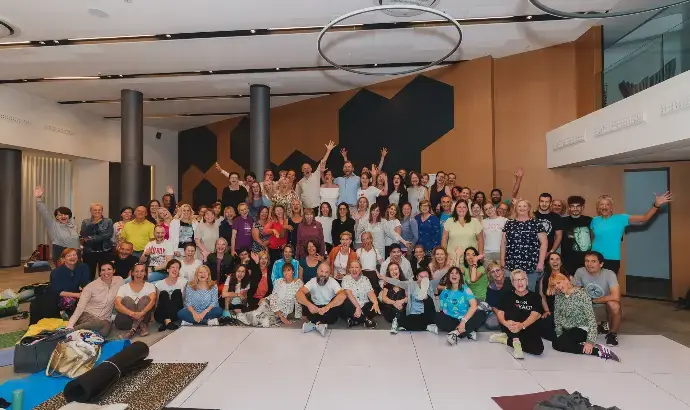
Being in a supportive workshop, retreat or community can give us enough distance from everyday pressures to see patterns that are difficult to recognise while we are living inside them.
The purpose is not to escape ordinary life. It is to return to it with a little more awareness.
To notice the automatic yes before it leaves your mouth. To recognise when fear is driving the conversation. To feel when you need rest rather than another push. To make decisions that include your health, relationships and inner life rather than treating them as an afterthought.
This is where healing becomes practical. It changes how we meet the next email, conversation, boundary and choice.
A Gentle Invitation to Listen
The decisions that shape our lives do not always arrive with a sense of certainty. Sometimes they arrive through disappointment. Sometimes they appear as a quiet pull we cannot yet explain. Sometimes life closes one path before we are able to see what another path may offer.
Guy could not have known what returning to Wales would eventually give him. He only knew that, at a pivotal moment, staying close to his family felt more important than continuing to chase the life he had planned.
We may not always receive such a clear turning point. More often, the invitation comes through the smaller moments when we notice that the way we have been living no longer feels sustainable.
At Live In Flow, our workshops, retreats, and Inner Self-Mastery are designed to create space for this kind of listening. Through meditation, breathwork, sound healing, nervous system support and conscious community, we explore what becomes possible when we stop overriding ourselves and begin meeting life with greater presence.
Not so someone else can tell you which path to take. So you can hear yourself more clearly when the next choice arrives.
You can explore our upcoming workshops, retreats and ongoing community here: 👉 Upcoming Retreats & Workshops
Before moving on with your day, take one comfortable breath and feel the support beneath your body. Notice whether there is something you have been trying to solve through pressure.
You do not need to understand the whole path today.
For now, listen for the next honest step.