A practical way to use your voice, breath, and awareness to regulate your system
Sound healing has become much more familiar over the past few years. Many people have experienced a sound bath, lay down under the vibration of gongs or bowls, and walked away feeling calmer, lighter, or more spacious.
That can be a beautiful experience. It can give the body a much-needed exhale and remind the nervous system what it feels like to soften. But there is also a limitation if sound healing only ever becomes something we receive from someone else.
You might leave a sound journey feeling peaceful, clear, and connected, only to find that everyday life meets you again not long after. The emails are still there. The conversation you have been avoiding is still there. The same stress patterns in the body can begin to return. This does not mean the sound healing did not work. It may simply mean we are being invited into the next stage of the practice.
The deeper invitation is not just to be healed by sound, but to learn how to work with sound in your own body and daily life. This is where sound healing becomes Sound Awakening.
From Sound Bath to Sound Awakening
A sound bath can be deeply restorative, especially when the body is exhausted or the mind has been running for too long. There is value in receiving, resting, and allowing the body to be held by vibration.
But if we only ever approach sound as something that happens to us, we can unconsciously place our healing outside of ourselves. We wait for the next session, the next facilitator, the next instrument, or the next retreat to bring us back into balance. Sound Awakening shifts that relationship.
Instead of seeing yourself as the instrument waiting to be played, you begin to recognise yourself as the one who can create sound, vibration, and regulation from within. Your own voice becomes part of the practice. Your breath becomes part of the practice. Your awareness becomes part of the practice. This does not replace being held in a guided sound journey. It simply gives you a way to bring the work home.
Why Your Voice Matters
Most of us use our voice all day to communicate with other people, but we rarely use it consciously as a tool for our own nervous system.
The voice is not just sound coming from the throat. It is vibration moving through the body. When you hum, tone, chant, sigh, or make a steady sound on the exhale, you are creating a felt vibration inside your own system. This can be surprisingly grounding.
You do not need to be a singer. You do not need to sound beautiful. You do not need to know the right note. In fact, trying to make it sound good can get in the way. The practice is not performance. It is participation.
The body responds to vibration, rhythm, breath, and attention. When these come together, sound can become a practical doorway into regulation.
Sound and the Nervous System
When we are stressed, overwhelmed, or carrying unresolved emotional patterns, the nervous system can become used to living on alert. The body may brace, the breath may become shallow, and the mind may keep scanning for what needs to be fixed, managed, or controlled. This is where simple vocal sound can be useful.
A long exhale, a hum, or a gentle tone can help bring attention back into the body. It gives the mind something steady to rest on and gives the nervous system a signal that it may be safe to soften.
There is also a physical reason this can be helpful. The vagus nerve, which plays an important role in the body’s relaxation response, is influenced by breath, sound, and vibration. Practices such as humming and toning can support the body to shift away from high alert and toward a more settled state.
This is not about trying to force yourself into peace. It is about giving your system a repeated experience of safety, one breath and one sound at a time.
State Change and Trait Change
One useful way to understand this is the difference between a state change and a trait change.
A state change is when you feel different for a short period of time. You might feel calm after a sound bath, clear after meditation, or open after a retreat session. These moments matter because they show the body what is possible.
A trait change is when that state becomes more available in everyday life. You still meet stress, challenge, emotion, and uncertainty, but your system has more capacity to respond rather than collapse, react, or shut down.
This is where daily practice becomes important. The goal is not to stay calm all the time. That would be unrealistic and, honestly, not very human. The goal is to build a relationship with your body so you can notice when you are becoming dysregulated and have simple tools to come back.
Sound can be one of those tools.
A Simple Daily Sound Practice
You do not need a gong, a crystal bowl, or a perfectly quiet room to begin. You can bring sound into your day in small, practical ways.
Here is a simple practice you can try:
Sit comfortably, place one hand on your chest or belly, and take a slow breath in through the nose. As you exhale, make a gentle humming sound or a soft “mmm” tone for as long as feels natural. Repeat this for three to five rounds and notice what changes in your body.
After a few rounds, pause and listen. Notice whether your breath has shifted, whether your shoulders have softened, or whether your mind feels slightly less busy. The shift does not need to be dramatic to be meaningful.
You can use this before a difficult conversation, after a stressful email, in the car before walking into work, or at the end of the day when your system needs help landing. This is how sound becomes less of an event and more of a relationship.
Listening Is Part of the Practice
Sound Awakening is not only about making sound. It is also about learning to listen.
When you tone or hum, you begin to notice where the sound vibrates in your body. You may feel it in the chest, throat, face, belly, or head. You may notice areas that feel open and areas that feel held. You may become aware of emotions that were sitting just below the surface.
This is not something to analyse too quickly. The practice is to listen without needing to immediately fix what you find.
In a culture that often teaches us to override discomfort, this kind of listening can be powerful. It helps us build trust with the body again. It reminds us that the body is not an obstacle to healing. It is part of the pathway.
Bringing Sound Into Real Life
One of the reasons this practice is so helpful is that it can be woven into ordinary life. You do not need to wait until you are on retreat or in a facilitated session to begin working with your system. You might use sound when you notice yourself becoming reactive. You might hum softly while walking. You might chant a simple tone in the shower. You might use a longer sigh at the end of a busy day to let your body know it is allowed to come down.
The practice does not need to be complicated. In fact, the simpler it is, the more likely you are to use it.
Over time, these small repetitions can begin to change your relationship with stress. Instead of waiting until you are completely overwhelmed, you begin to recognise earlier signals. You begin to meet the body before it has to shout.
Sound Healing as a Shared Experience
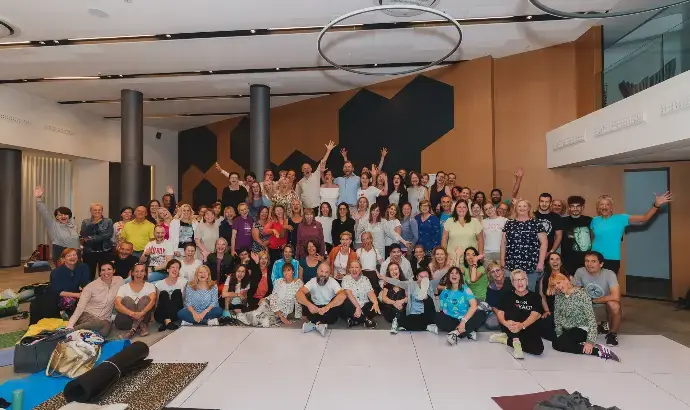
There is still something very powerful about being in a shared sound journey, workshop, or retreat space. When a group of people come together with intention, breath, sound, and presence, it can create a container that supports deeper layers of healing.
The difference is that you are not coming into that space as a passive participant waiting to be fixed. You are coming in as someone learning to participate in your own healing. That shift matters.
When you understand that sound lives in you, the sound journey becomes less about what the facilitator does to you and more about what awakens within you.
A Gentle Invitation to Practice
At Live In Flow, sound is woven through many of our retreats, workshops, and in-person experiences because it speaks to the body in a way words often cannot. Alongside breathwork, meditation, embodiment, and conscious community, sound can help create a grounded pathway into expanded awareness, emotional healing, and nervous system regulation.
But the work does not only happen in the room. It continues in the way you breathe, listen, respond, and return to yourself in daily life.
If this speaks to you, you can explore our upcoming retreats and workshops: 👉 Upcoming Retreats and Workshops
Before you move on, try one gentle hum on your next exhale. Do not worry about how it sounds. Feel where it lands in your body. Notice what softens, even slightly.
Sometimes the next step in healing is not searching for something outside of yourself. Sometimes it begins with learning how to hear, feel, and trust the instrument you have been living in all along.