A practical way to recognise resistance, create space, and listen more deeply to what your life may be showing you
There are times in life when things feel difficult because we are moving through something that asks courage and persistence from us. Then there are other times when life feels difficult because, somewhere underneath everything, we know we are pushing in a direction that no longer feels right.
You might be trying harder in a relationship, putting more energy into work, overthinking a decision, or telling yourself you simply need to be more disciplined. Nothing may look dramatically wrong from the outside, yet inside there is a growing sense that something needs your attention.
Most of us are very good at overriding that feeling. We keep going, make another plan, think harder, and convince ourselves that once we get through this week, this project, or this difficult season, things will feel different.
Sometimes persistence is exactly what is needed. But sometimes what we call a problem is also information.
In a recent solo episode of Let It In, Guy shared a period of his life when financial pressure, relationship difficulties, disappointment, and a cycling accident all collided. Looking back, he could see how much energy he had been putting into chasing a version of success while deeper parts of himself were asking for attention.
The useful part of that story is not the idea that every difficult event happens for a reason. Life can be painful and unpredictable without needing a spiritual explanation. The deeper question is more practical:
How do we know when we are being asked to keep going, and when we are being asked to stop pushing long enough to listen?
Change Your State Before You Make the Decision
When something feels wrong, most of us immediately start searching for an answer. We want to know whether we should stay, leave, wait, speak up, try harder, or finally do something different.
Those questions become even harder when the nervous system is already under pressure. When we feel stressed, frightened, angry, or overwhelmed, the mind naturally looks for certainty. We can become more focused on what might go wrong and more desperate to make the discomfort disappear.
This is why the first step does not always need to be making a decision. Sometimes the first step is changing the state from which you are trying to make it.
Before trying to solve the whole situation, notice your body. Is your breathing shallow? Are your shoulders lifted? Is your jaw tight? Are your thoughts racing?
Take several slower breaths and feel your feet on the ground. You are not trying to make the problem disappear. You are simply creating enough space to meet it from somewhere other than urgency.
This is something we return to often at Live In Flow. Regulation does not make every decision obvious, but it can help us become less reactive and more available to what is actually happening.
Notice Where You Are Forcing
Effort is not the problem. Relationships require effort. Building something meaningful requires effort. Meditation takes practice, and healing often asks us to stay with things that would be easier to avoid.
But there is a difference between effort that feels challenging and alive, and effort that feels like you are constantly dragging yourself against something inside you.
Perhaps you keep telling yourself everything will be fine once one more thing changes. Maybe you feel relief when a commitment is cancelled. You might repeatedly imagine another way of working, living, or relating, only to dismiss it because it feels inconvenient or uncertain.
These reactions do not automatically mean you should walk away from something. They simply deserve to be noticed.
Ask yourself:
Am I staying because this still matters deeply to me, or because change feels frightening?
Am I pushing because this challenge is helping me grow, or because I am afraid of what it might mean to stop?
What keeps returning to my awareness, even when I try to dismiss it?
The aim is not to become impulsive. It is to become more aware of what is driving you.
Include the Body in the Conversation
Most of us are used to making decisions through thought. We compare options, think about what makes practical sense, consider what other people might say, and try to predict the future. All of that matters, but the body is responding too.
The next time you are thinking about something uncertain, pause before analysing it. Notice what happens physically when you imagine continuing exactly as you are. Then notice what happens when you imagine allowing something to change. You may feel tension, heaviness, relief, fear, energy, sadness, or nothing obvious at all.
The purpose is not to treat every bodily sensation as a message telling you what to do. The body responds to past experiences, fear, expectations, and many other things. The practice is simply to include it in the conversation rather than allowing thought to dominate everything.
This is also useful when trying to understand fear. Something can feel uncomfortable because it is not right for us, but it can also feel uncomfortable simply because it is unfamiliar. Fear does not always mean stop.
You might feel nervous about speaking honestly, setting a boundary, beginning something new, attending a workshop alone, or changing a long-standing pattern. Instead of immediately reacting to the fear, get curious about it.
Are you afraid because something genuinely feels unsafe, or because it is unfamiliar? Are you afraid of failing, disappointing someone, or being seen trying?
Sometimes what looks like resistance is self-protection. Sometimes it is an old pattern. Sometimes it is wisdom. Creating a little more space helps us begin telling the difference.
When you notice yourself forcing, try this:
Place both feet on the floor and notice where you are holding tension.
Take three slower breaths.
Ask, “What do I actually need before I take the next step?”
Notice the first honest response before talking yourself out of it.
You may still choose to keep going. The difference is that you are making that choice more consciously.
Let Meditation Become a Place Where You Listen
Meditation can easily become another thing we use to try to escape what we are feeling. We sit down hoping the mind will become quiet, the tension will disappear, and the difficult emotions will soften. When that does not happen, we assume the meditation did not work.
There is another way to approach it. Instead of using meditation only to become calm, we can use it to become more available to ourselves.
Before your next meditation, sit comfortably and take several slower breaths. Feel where your body meets the chair or floor and allow your attention to settle.
Then quietly ask:
What have I not been listening to?
You do not need to chase an answer. Sit with the question for five or ten minutes and notice what arises. It may be a thought, emotion, memory, sensation, or nothing obvious at all.
The practice is not about receiving a perfect message. It is about creating enough quiet to notice what is already present.
If your mind is very busy, begin with a few gentle hums or longer exhalations before moving into silence. Meditation does not have to give you an answer to be useful. Sometimes the value is simply that you stopped long enough to hear yourself again.
Why Deeper Practice Can Help
The small practices we use at home matter because this is where most of life happens. A few slower breaths before replying to an email matter. A short meditation matters. Taking a walk before making a decision matters. But there are also times when it can help to step further away from the pace and patterns of everyday life.
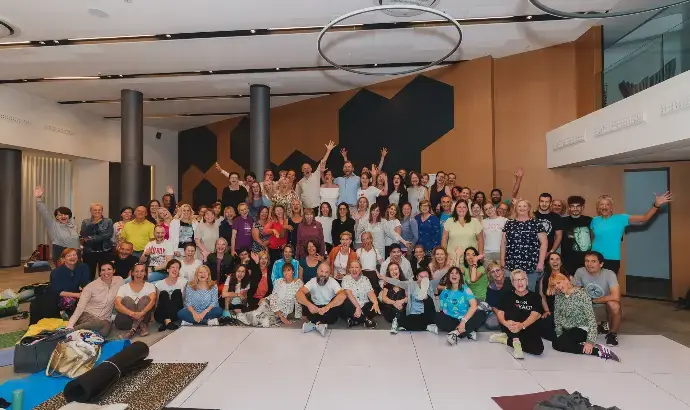
This is part of why we create workshops, retreats, and Inner Self Mastery at Live In Flow. The intention is not for Guy, Petra, Matt, or anybody else to tell you what you should do with your life. It is to create an environment where you can slow down enough to notice yourself differently.
A workshop can give you space to experience breath, meditation, sound, nervous system awareness, and embodied practices. A retreat gives those practices more time to settle, while Inner Self Mastery offers a way to keep practising at home through meditation, coaching, reflection, and community.
The real value is not simply what happens during the experience. It is what begins to change in the way you meet your relationships, decisions, stress, and everyday life.
A Practice for the Next Seven Days
For the next week, choose one moment each day when you usually feel rushed, reactive, uncertain, or inclined to push through.
Pause and take three slower breaths. Then ask:
Where am I pushing right now?
Follow it with:
What might happen if I stopped pushing for one minute and listened instead?
Notice what comes up in your body as well as your thoughts. You may realise that you need rest, space, support, movement, honesty, or a conversation. You might recognise that you have been avoiding something that requires action, or see that you are looking for certainty where there simply is none yet.
You may also realise that the direction you are already moving in still feels right, but you need more support while walking it.
The practice is not about finding the perfect answer. It is about interrupting the automatic movement forward long enough to notice what is actually happening.
Bringing the Teaching Into Real Life
One of the deeper lessons in Guy's story is that we do not always recognise a turning point while we are standing in the middle of it.
Sometimes life changes suddenly. At other times, the redirection is quieter. It may arrive as exhaustion, restlessness, a thought that keeps returning, a loss of enthusiasm, or curiosity about something new.
We do not need to interpret every difficult experience as a message from the universe, and we do not need to make dramatic changes every time something feels uncomfortable. But we can become better listeners.
We can notice where we are forcing, include the body in the conversation, use meditation to become more present, and create enough space to recognise what may already be asking for our attention. We do not need to see the whole path. Sometimes the next honest step is enough.
This is the kind of work we continue to explore through Live In Flow. The intention is not simply to understand ourselves intellectually, but to practise these tools deeply enough that they become available when real life asks something of us.
If you feel drawn to explore this work more deeply, you can discover our upcoming workshops, retreats, and ways to practise with us at Live In Flow: 👉 Upcoming Retreats & Workshops